
Your SaaS is growing, but you don’t have the headcount to hire a dedicated customer success manager. Accounts churn, and nobody finds out until a cancellation email lands in the shared inbox. You know you should be watching accounts more closely, but the team is already stretched between product, sales and support.
This article walks through how to build a customer success small team practice using the people and tools you already have, so retention doesn’t depend on a hire you can’t make yet.
Key takeaways
- Customer success is a practice, not a department. Any team member who talks to customers can own a piece of retention.
- Automated health signals replace the manual account reviews that small teams never get to.
- Start with three things: a way to track account health, an alert when something changes, and a clear owner for every account.
Customer success is a practice, not a headcount
The phrase “customer success team” suggests a department with org charts and titles. For companies under 50 employees, that rarely exists. But the work still needs to happen: someone needs to notice when an account goes quiet, when usage drops, or when a renewal is approaching with no recent engagement.
In a customer success small team setup, the work is distributed. A founder handles the top 10 accounts. A support lead watches ticket patterns. A sales rep who closed the deal stays in touch through the first 90 days. None of them carry the title “CSM,” but together they cover the same ground.
The difference between this working and not working comes down to visibility. When nobody can see which accounts are healthy and which are slipping, everyone assumes someone else is watching. That’s how accounts churn without anyone noticing until the invoice stops.
The five jobs that replace a CS team
Customer success isn’t one job. It’s a handful of recurring tasks that, without a dedicated team, need to be assigned explicitly. Here are the five that matter most for retention.
1. Onboarding follow-up. After a new customer signs up, someone checks in at day 3, day 14 and day 30 to make sure they’ve activated the core features. At most companies without a CS team, the person who closed the deal handles this. The key is that it happens on a schedule, not when someone remembers.
2. Health monitoring. Someone needs to know when an account’s usage drops, when key users stop logging in, or when support tickets spike. In a small team, this is often nobody’s job, which is exactly why accounts slip through. Automated churn alerts solve this without adding a standing meeting.
3. Renewal preparation. Sixty to ninety days before a renewal, the account owner should review usage, check health and decide whether proactive outreach is needed. Without a CS platform flagging upcoming renewals, this gets missed because it’s invisible in the CRM.
4. Escalation handling. When a customer is upset or at risk of leaving, someone senior needs to step in quickly. The difference between saving the account and losing it often comes down to response time. Clear escalation paths matter more than team size.
5. Account ownership. Every paying account needs one person who is responsible for the relationship. At small companies, this might be the founder for enterprise accounts, a support lead for mid-market, and self-serve for the long tail. The assignments don’t need to be fancy. They need to exist.
Manual reviews versus automated health monitoring
Most small teams start with a manual approach: a weekly meeting, a shared spreadsheet, someone pulling data from Stripe and the product database. It works for 20 accounts. It breaks at 100.
The table below compares the two approaches side by side.
| Dimension | Manual spreadsheet review | Automated health monitoring |
|---|---|---|
| Setup time | A few hours to build the spreadsheet | A few hours to connect data sources |
| Ongoing time per week | 2-4 hours pulling and reviewing data | Minutes, only when alerts fire |
| Scales to 100+ accounts | No. Data goes stale between reviews | Yes. Every account is scored daily |
| Catches mid-cycle drops | Only if someone checks between meetings | Alerts fire within hours of a change |
| Requires a dedicated person | Yes. Someone has to maintain the sheet | No. Alerts route to the account owner |
| Cost | Staff time only | Software subscription |
The shift doesn’t have to be all at once. Many SaaS founders start with a spreadsheet for their first 20 accounts, then add automated health scoring once the account base outgrows what one person can review in a meeting.
The best time to automate health monitoring is right before the manual version breaks.
Health scores for teams without a CSM
Veermo gives every account a daily health score and alerts the owner when risk changes, so your small team can focus on the accounts that need attention right now.
How to assign account ownership without a CS org
The biggest retention gap in small SaaS companies isn’t tooling. It’s that nobody owns the relationship. A customer can be on a paid plan for a year without a single person internally knowing whether they’re happy or heading for the door.
Here’s a simple ownership model that works for most teams between 5 and 50 employees:
Top 10 accounts by ARR: the founder or CEO. These relationships are strategic. The customer often signed because of a direct conversation with the founder, and they expect to keep that line open.
Mid-market accounts: the support or operations lead. This person already talks to these customers when issues come up. Adding a proactive check-in every quarter turns a reactive relationship into a retention-focused one.
Self-serve and long-tail accounts: no individual owner. Instead, use automated health monitoring and alerts. When an account’s health drops, the alert routes to whoever is on point that week. This keeps the long tail from consuming all of someone’s time while still catching the ones that are slipping.
Write the assignments down. A shared document or a field in your CRM is enough. The point isn’t the format. It’s that when a customer’s health score drops, one person sees the alert and knows it’s theirs to handle.
Three warning signs your current approach isn’t working
Small teams often think retention is “fine” because they’re not hearing complaints. Silence isn’t a signal of satisfaction. It’s usually a signal of disengagement. Here are three patterns to watch for.
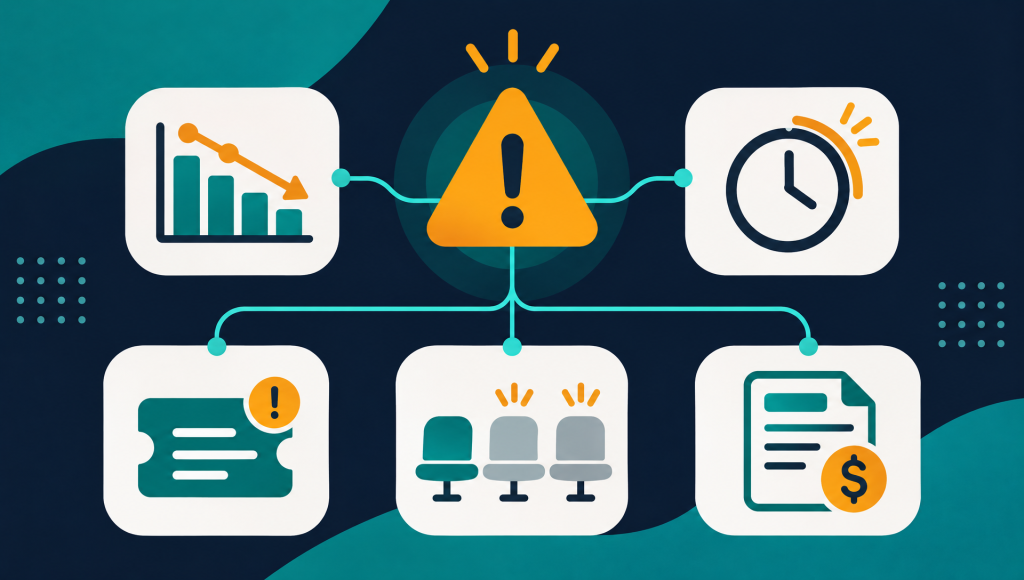
Churned accounts surprise you. If cancellations feel random, your team doesn’t have visibility into what was happening inside the account before the decision was made. By the time a customer sends a cancellation email, they decided to leave weeks ago.
Your weekly account review keeps getting skipped. Manual reviews only work when someone protects the time. If the meeting gets bumped for a product sprint or a sales call more than twice a month, the process has already failed. The accounts reviewed in week one are already stale by week three.
Net revenue growth is flat despite new sales. You’re closing new logos every month, but MRR isn’t moving. That’s the clearest sign that churn is eating growth. When you plot new revenue against lost revenue and the lines are parallel, the retention problem is urgent, even if no one is raising an alarm.
Building the habit before you build the team
Hiring a VP of Customer Success when you have 50 accounts and 8 employees is premature. But doing nothing about retention until you can afford that hire is a mistake. The gap between “no CS at all” and “full CS team” is where most early-stage churn happens.
The goal is to build the habit and the infrastructure now, so that when you do hire a CS lead, they walk into a company that already has health scores, account ownership, and alert workflows in place. That hire becomes an accelerant instead of a rescue mission.
Start with one action this week: write down who owns each of your top 20 accounts. If nobody does, assign them. Then set up a way to know when one of those accounts goes quiet, whether that’s a calendar reminder to check usage, a Slack alert from your billing tool, or an automated health score from a platform like Veermo.
Retention is a practice. The team comes later.