SaaS companies are often under constant pressure to acquire more customers. Marketing teams track website traffic, leads, free trials, demo requests, customer acquisition cost, and new subscriptions. Sales teams focus on closing more deals. Growth teams look for new channels that can bring another wave of users.
But there is a problem with treating acquisition as the main definition of growth: new customers only create lasting value when they stay.
A SaaS company can spend heavily on advertising, content, partnerships, outbound sales, and other acquisition channels while still struggling financially if customers leave shortly after signing up. In that situation, the business is constantly replacing lost customers instead of building on its existing customer base.
This is why retention has become such an important part of SaaS economics. SaaS Capital's retention research has repeatedly shown a strong relationship between net revenue retention and growth, while gross revenue retention provides a clearer view of how much existing revenue the business is actually keeping.
The real challenge for SaaS companies, therefore, is not simply acquiring more customers. It is building a system where acquisition, activation, customer success, product value, and retention work together.
Acquisition Is Only the Beginning of SaaS Growth
Customer acquisition is visible.
A company launches a campaign and sees website visits increase. A content team publishes an article and organic traffic grows. A sales team starts a new outbound campaign and generates more demos. A paid campaign brings hundreds of trial users into the product.
These numbers can create the impression that the company is growing quickly.
But acquisition is only the beginning of the customer lifecycle. A customer who signs up today may cancel three months later. Another may remain subscribed but downgrade their plan. A third may continue using the product but never adopt additional features. Another may become a long-term customer and increase spending over time.
All four customers were initially counted as acquisitions, but their economic value is completely different.
This is why SaaS companies need to move beyond the question of “How many customers did we acquire?” and start asking “How much value are those customers creating over time?”
That shift changes the way companies evaluate marketing campaigns, product improvements, onboarding, pricing, customer support, and even SEO.
The Revenue Leak Created by Customer Churn
Imagine a SaaS company spends $100,000 on marketing and sales during a quarter and acquires 500 new customers.
On the surface, this might look successful.
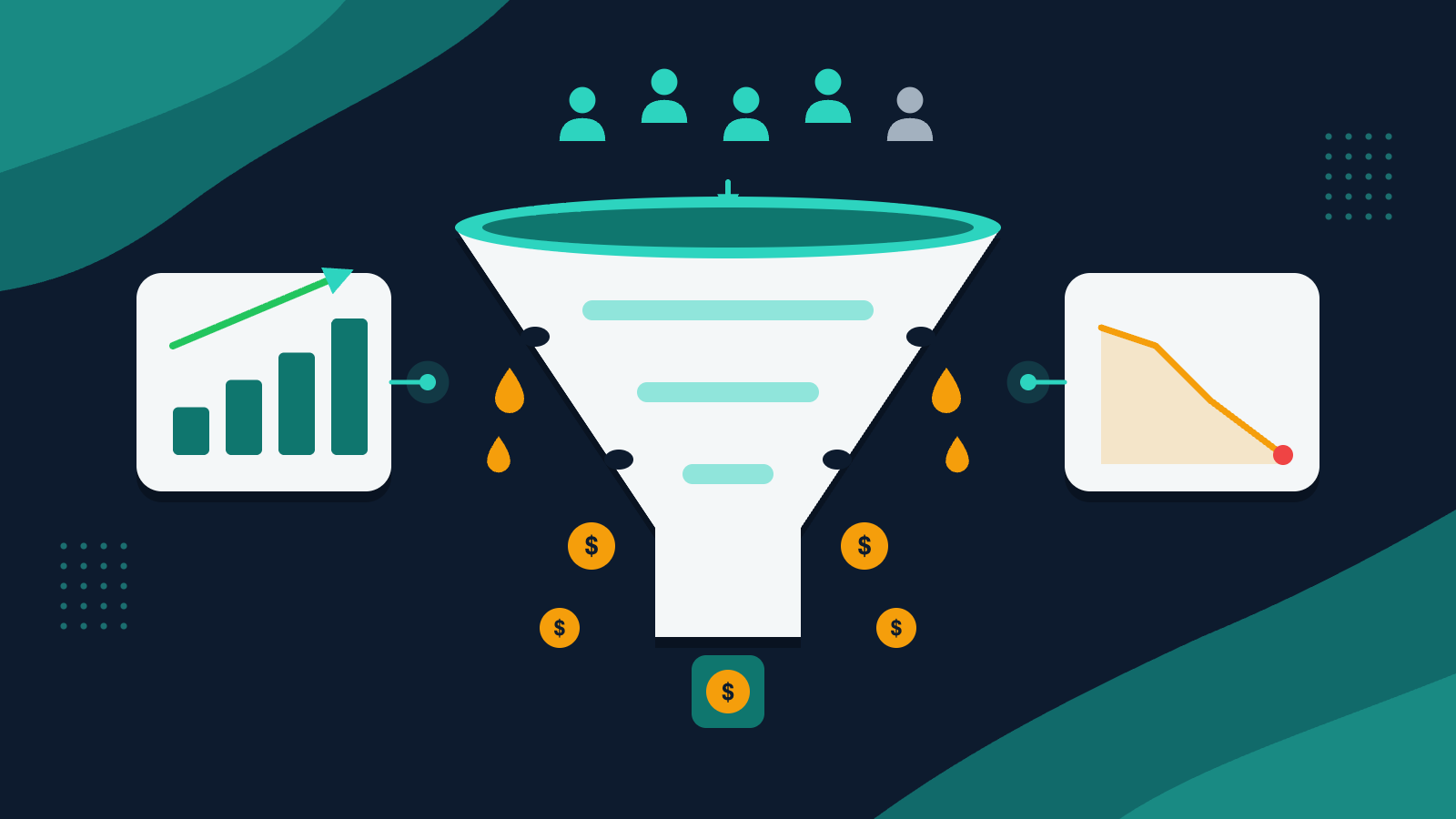
Now imagine that a significant percentage of those customers leave within several months because they never fully understand the product, cannot achieve the promised outcome, or find the onboarding process difficult. The company now has to acquire another group of customers simply to replace the revenue it lost.
This creates a cycle:
Acquire → Convert → Lose customers → Acquire again → Replace lost revenue → Repeat
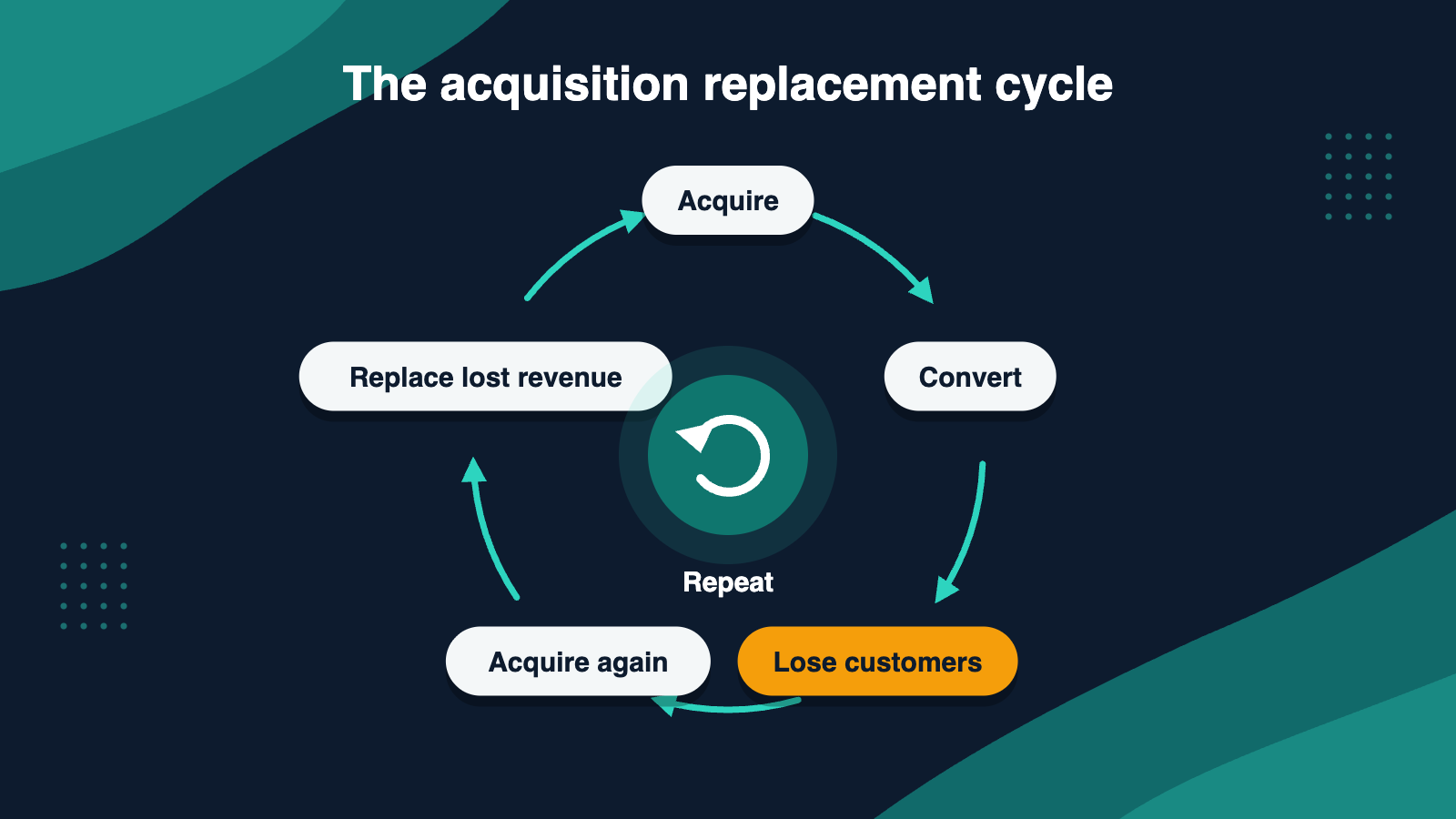
The business may continue reporting new customer growth, but its underlying revenue base remains unstable.
Retention breaks this cycle.
When customers remain longer, the original acquisition investment has more time to generate returns. When customers expand their usage or move to higher-value plans, the same customer relationship can produce additional revenue without requiring the company to restart the entire acquisition process.
This is one reason net revenue retention is closely watched in SaaS businesses. NRR accounts for churn, downgrades, upgrades, cross-sells, and expansions among an existing customer cohort.
Why More Leads Do Not Automatically Mean Better Growth
A common mistake for SaaS companies is assuming that generating more leads will automatically solve their growth problem. More traffic, inquiries, and trial sign-ups may look positive on a marketing dashboard, but they do not necessarily translate into long-term revenue.
This becomes particularly important when SaaS companies invest in SEO. Ranking for hundreds of keywords and generating thousands of monthly visitors can create impressive traffic numbers, but the real question is whether those visitors are relevant enough to become paying customers and remain with the product.
This is where white label SEO services can be useful for SaaS companies and agencies managing SEO campaigns. Instead of treating SEO as a simple traffic-generation activity, the focus can be placed on attracting users based on search intent, business relevance, and potential customer value. A page targeting a highly specific SaaS problem may generate fewer visitors than a broad informational article, but those visitors may have a much stronger reason to evaluate the product.
Cost also needs to be considered alongside traffic and lead generation. An SEO cost calculator can help businesses estimate the potential investment involved in different SEO activities, from content production and technical optimization to ongoing campaign management. This makes it easier to compare the cost of acquiring organic customers with the potential revenue those customers can generate over time.
For example, suppose one SEO campaign generates 1,000 leads but attracts customers with poor product fit and high churn. Another campaign generates only 300 leads but brings customers who remain subscribed for several years. The first campaign may look better when measured by lead volume, but the second can be significantly more valuable when measured by customer lifetime value, retention, expansion revenue, and acquisition cost.
The same principle applies when agencies manage SEO campaigns on behalf of SaaS clients. A successful campaign should not simply aim for more rankings or traffic. It should attract the right audience and support measurable business outcomes.
Ultimately, SaaS companies should stop asking only “How many leads did our SEO generate?” and start asking “How many valuable, long-term customers did our SEO help us acquire?” That shift turns SEO from a traffic-generation exercise into a more meaningful part of sustainable revenue growth.
Retention Starts Before the Customer Becomes a Customer
Retention is often treated as a customer-success problem.
By the time a customer is considering cancellation, however, many of the factors affecting that decision may already have been established.
The customer's expectations were shaped by marketing. Their understanding of the product was influenced by the sales process. Their first experience was determined by onboarding.
Their perception of product quality was shaped by the user experience. Their ability to achieve results depended on whether the product actually solved the problem that motivated the purchase. This means retention starts much earlier than the cancellation stage.
If marketing promises something the product cannot realistically deliver, the company may acquire customers who were never a good fit. If sales teams overpromise functionality, customers may enter the product with unrealistic expectations. If onboarding is confusing, customers may never reach the product's core value.
Each of these problems can eventually appear as churn.
Product-Market Fit Has a Direct Connection to Retention
A SaaS company can have an excellent marketing strategy and still struggle with retention if its product does not solve an important problem well enough.
This is why acquisition can sometimes hide product-market-fit problems. Imagine a SaaS business that receives thousands of visitors every month and converts a healthy percentage of them into trials. If most users stop using the platform after the first few weeks, increasing advertising spend is unlikely to solve the underlying problem.
The company may simply be pouring more users into a product that does not yet create enough lasting value.
Retention data can therefore become a product feedback system.
High churn may reveal:
- Missing features
- Poor onboarding
- Weak usability
- Pricing problems
- Lack of integrations
- Inadequate customer support
- Poor product performance
- Misaligned customer expectations
- Weak product-market fit
Instead of treating churn only as a financial problem, SaaS companies should use it as a source of product intelligence.
Activation Is the Bridge Between Acquisition and Retention
One of the most important stages between acquisition and retention is activation. A customer may create an account, but that does not mean they have experienced the product's value.
Activation occurs when users reach a meaningful milestone that demonstrates why the product is useful. For a project management SaaS platform, that might mean creating a project and inviting a team.
For an analytics product, it might mean connecting a data source and generating the first meaningful report.
For an automation platform, it might mean successfully creating and running the first workflow.
The exact activation event differs from product to product. The important point is that SaaS businesses should identify the actions that correlate with long-term retention.
Once those actions are understood, onboarding can be designed around helping customers reach them faster.
Customer Onboarding Can Reduce Early Churn
The first few days or weeks of a SaaS relationship can strongly influence whether a customer stays.
A complicated onboarding process can create unnecessary friction.
Customers may not understand where to start, which features matter, how to configure the product, or how to measure their initial results.
Good onboarding reduces this uncertainty. It can include guided setup, product tours, educational content, templates, implementation support, personalized recommendations, documentation, and proactive customer success communication.
The objective should not simply be to teach customers how to use every feature. It should be to help them achieve their first meaningful outcome as quickly as possible.
The faster a customer experiences value, the easier it becomes to justify continued subscription spending.
SaaS Companies Need to Track Revenue Retention, Not Just Customer Retention
Customer retention and revenue retention are related, but they are not identical.
A company could retain 90% of its customers while losing a much larger percentage of its revenue if the customers leaving are high-value accounts.
Conversely, a company could lose some smaller customers while expanding significantly within larger accounts. This is why metrics such as Gross Revenue Retention and Net Revenue Retention are useful.
Gross Revenue Retention focuses on how much existing recurring revenue remains after accounting for churn and downgrades. Net Revenue Retention additionally accounts for expansion revenue.
Recent SaaS benchmark research has reported median NRR around the low 100% range for private B2B SaaS companies, although benchmarks vary by company size, contract value, pricing model, and market segment.
The practical lesson is more important than any single benchmark: a SaaS business should understand how much revenue its existing customer base is actually retaining and expanding.
Expansion Revenue Can Change the Growth Equation
Retention does not mean simply preventing cancellations.
The strongest customer relationships can become sources of additional revenue.
Expansion can happen through:
- Plan upgrades
- Additional seats
- Increased usage
- New product modules
- Cross-selling
- Additional services
- Enterprise packages
- Feature-based upgrades
This changes the economics of SaaS growth.
If an existing customer increases spending, the company generates additional revenue without paying the full acquisition cost associated with finding a new customer.
This is one reason SaaS companies should think about customer success and expansion together. A retained customer who never grows may still be valuable. A retained customer who consistently expands can become one of the strongest growth assets in the business.
Acquisition and Retention Should Share the Same Customer Data
Another important issue is organizational separation.
Marketing teams may focus on acquisition metrics. Sales teams may focus on conversion rates. Product teams may focus on usage. Customer success teams may focus on renewals. Finance teams may focus on recurring revenue.
If these teams operate independently, the company can struggle to understand the complete customer journey.
A better approach is to connect acquisition data with post-sale behavior.
For example, a SaaS company could examine whether customers acquired through a particular campaign:
- Activate faster
- Use more features
- Stay longer
- Upgrade more frequently
- Require more support
- Generate higher lifetime value
- Churn at a higher rate
This creates a more useful definition of marketing performance.
Instead of asking which channel brings the most customers, the business can ask which channel brings the best long-term customers.
Where SEO Fits Into SaaS Retention Strategy
SEO is primarily an acquisition channel, but its impact does not have to stop at acquisition.
The type of content a SaaS company publishes can influence who discovers the product.
For example, educational content can attract early-stage researchers, comparison content can reach users evaluating alternatives, product-led content can help prospects understand specific use cases, and technical resources can attract highly qualified audiences with specific problems.
This makes search intent important.
A SaaS company should understand whether a keyword represents curiosity, research, problem-solving, product evaluation, or purchase intent.
The goal is not simply to rank for as many keywords as possible.
The goal is to create a search ecosystem that attracts the right audience at different stages of the customer journey.
This is also where an external partner can be useful for growing companies that do not want to build every marketing capability internally. A provider such as Triple Minds can support businesses across technology and digital marketing, allowing SaaS companies to think about acquisition as part of a broader growth system rather than treating each channel as an isolated activity.
How SaaS Companies Can Reduce the Gap Between Acquisition and Retention
The solution is not to stop investing in acquisition.
SaaS companies still need a healthy flow of new customers to grow.
The goal is to make acquisition and retention work together.
A practical approach starts with five questions.
1. Are we acquiring the right customers?
Look beyond lead volume and examine customer quality, product fit, activation, and retention.
2. What does a successful customer do early in the journey?
Identify the behaviors associated with long-term retention and build onboarding around them.
3. Why are customers leaving?
Analyze cancellation reasons, support requests, usage patterns, product feedback, and customer interviews.
4. Which acquisition channels produce the strongest customers?
Compare channels based on retention and lifetime value, not just initial conversion.
5. How can existing customers expand?
Identify opportunities for upgrades, additional products, increased usage, and deeper adoption.
These questions create a growth model where acquisition is measured by its downstream business impact.
The Real Cost of Ignoring Retention
A SaaS company with poor retention faces more than lost subscriptions.
It may also experience higher customer acquisition pressure, inefficient marketing spend, unstable forecasting, weaker customer lifetime value, and increased pressure on sales teams. The business becomes dependent on continuously finding new customers. That can be especially dangerous when acquisition channels become more expensive or competitive.
When organic search becomes harder, advertising costs rise, competition increases, or sales cycles become longer, companies with weak retention have fewer options. Companies with strong retention have a different position. Their existing customer base provides recurring revenue, expansion opportunities, product feedback, referrals, and a more stable foundation for future growth.
This is why retention should not be viewed as the department responsible for stopping cancellations. It is part of the company's overall growth strategy.
Building a SaaS Growth Engine That Does Not Leak
Acquisition and retention should never be treated as competing priorities.
Acquisition fills the pipeline.
Activation helps customers experience value. Retention protects recurring revenue. Expansion increases customer value. Referrals can then create another acquisition loop.
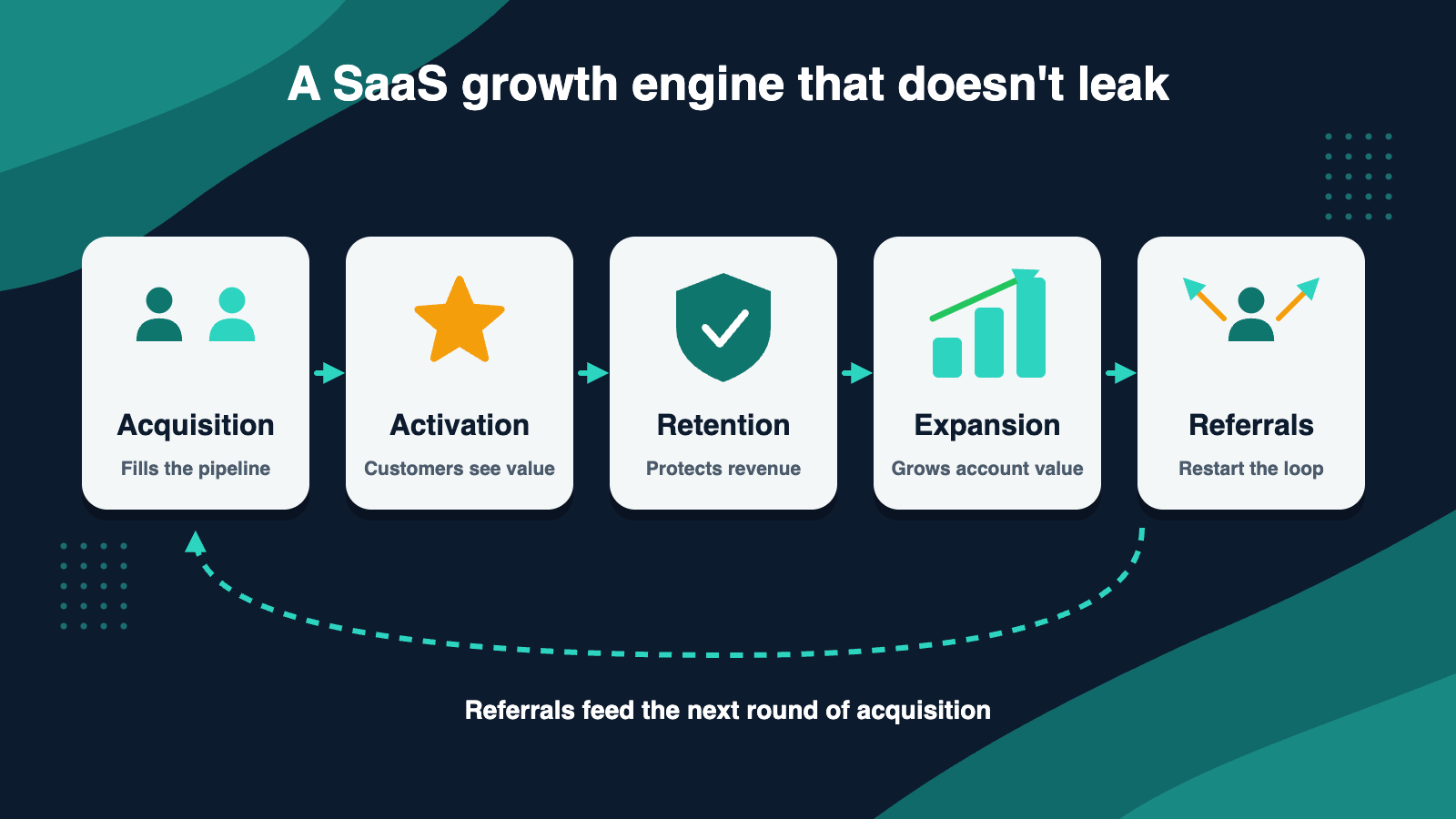
The strongest SaaS businesses build these stages into a connected system. A company that spends heavily on acquisition while ignoring retention may create impressive top-line numbers for a period of time, but it risks constantly replacing lost customers.
A company that focuses only on retention without acquiring new customers can also limit its growth potential.
The objective is balance.
Marketing should attract the right customers. Product teams should help them achieve value. Customer success should help them continue succeeding. Sales and account teams should identify appropriate expansion opportunities. Leadership should measure the entire customer lifecycle rather than celebrating acquisition numbers in isolation.
Conclusion
SaaS growth cannot be measured by acquisition alone. Bringing new customers into the business is only the first step; the real value comes from keeping those customers, helping them achieve results, and creating opportunities for long-term expansion.
When churn remains high, even successful acquisition campaigns can become expensive because the business is constantly replacing lost revenue. A stronger approach connects marketing, onboarding, product experience, customer success, and expansion into one continuous customer journey.
For SaaS companies looking to build sustainable growth, Triple Minds can support the broader technology and digital marketing side of that journey. Ultimately, the goal is simple: attract the right customers, deliver measurable value, and give them enough reason to stay. When acquisition and retention work together, growth becomes more predictable, profitable, and sustainable.